
FFFUT
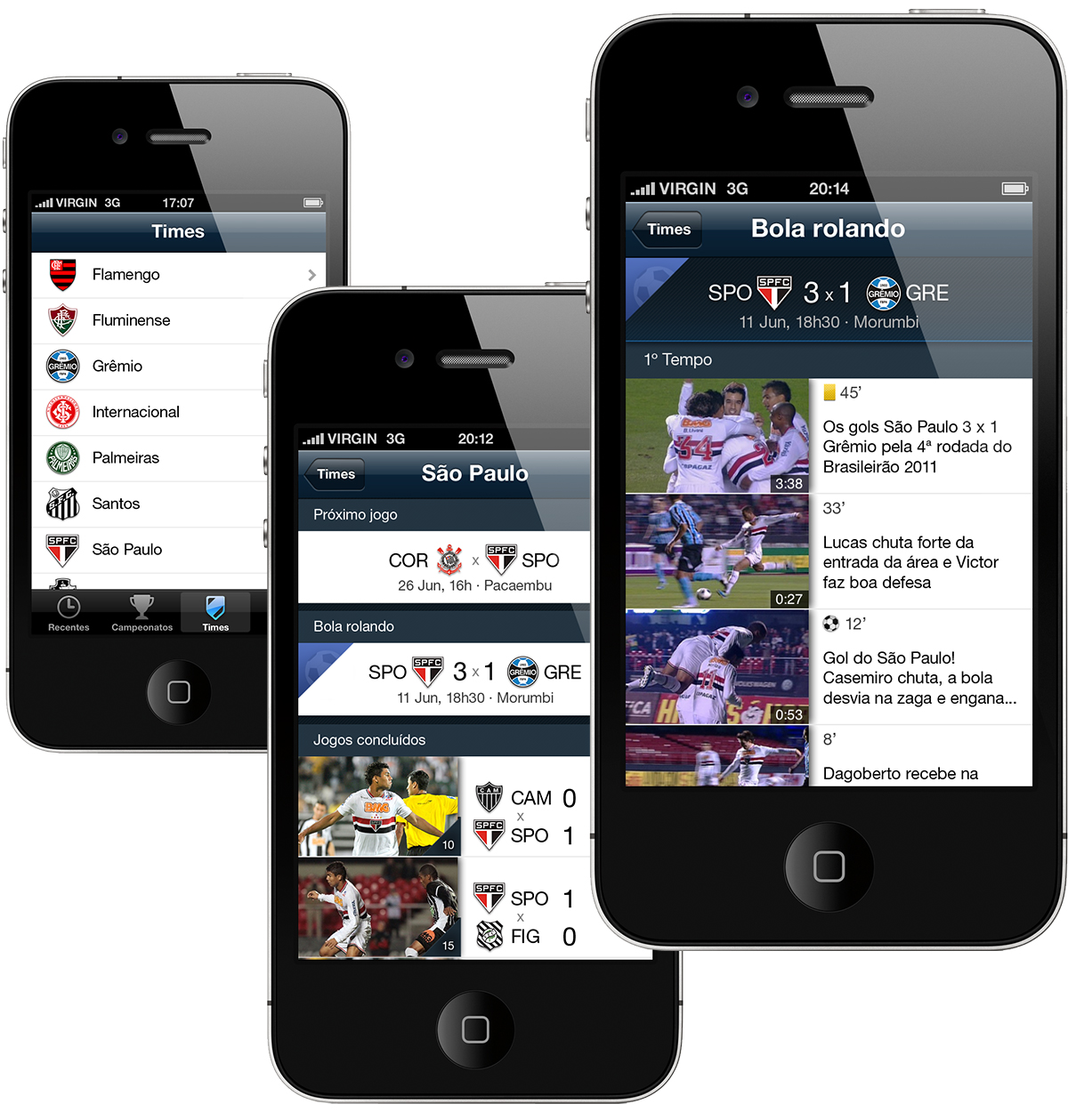
Designing a mobile experience that helps soccer fans follow teams, relive key moments, and stay connected to championships in real time.
Role
Senior User Experience and Product Design Lead
Platforms
iOS and Android
Scope
Product Strategy, Design Leadership, Product Design, Mobile Design, Interaction Design, Visual Interface Design, Prototyping, Usability Testing, Agile, Scrum, Cross-functional Collaboration
Overview
FFFUT was a mobile app designed for soccer fans in Brazil to follow their favourite teams and championship campaigns through live updates, notifications, statistics, and match highlights.
At a time when sports apps largely focused on static scores and fragmented content experiences, the opportunity was to create a more immersive and emotionally engaging mobile product—one optimized for fast interactions, live events, and continuous engagement.
As UX and Product Design Lead, I led the end-to-end design process from early product strategy through research, wireframing, prototyping, usability testing, and final UI execution across iOS and Android.
Beyond the product experience itself, the initiative also required aligning business viability, technical feasibility, and user desirability from the earliest stages of the project.
The project also marked an important early leadership experience in my career, combining hands-on product design with cross-functional collaboration, systems thinking, design leadership, and product strategy.
Strategic contribution
Before the official project kickoff, I collaborated closely with business and product stakeholders to help define the preliminary business model and product vision for FFFUT.
This strategic work contributed to a proposal that was later awarded funding through Brazil’s Innovation Fund program, supported by the Brazilian Innovation Agency (FINEP) and the Ministry of Science, Technology, and Innovation (MCTI).
This phase required balancing product opportunity, market positioning, user needs, and technical considerations to help establish the foundation for the product roadmap and investment case.
Contributing to the investment case early in the process strengthened my understanding of how product design can influence not only interfaces and usability, but also business direction and innovation strategy.
Responsibilities
As UX and Product Design Lead, I was responsible for defining both the product experience and the design process. I led a team of three UX/UI designers while collaborating closely, through Scrum, with product owners, software engineers, scrum masters, and business stakeholders.
My responsibilities included:
Conducting user research and defining UX principles
Creating information architecture, user flows, wireframes, and prototypes
Planning and facilitating usability testing sessions
Designing high-fidelity mobile interfaces for iOS and Android
Driving design decisions throughout product development
Aligning user needs, business goals, and technical constraints
Beyond hands-on design execution, I also played a key role in facilitating collaboration across teams and maintaining a cohesive product vision throughout the project lifecycle.
Product design process
1. Research and discovery
To better understand fan behaviours and expectations, I conducted research focused on how users consumed sports content on mobile devices, what information they prioritized during matches, and where existing products created friction.
The core challenge was designing a mobile experience capable of organizing dynamic sports information into interactions that felt intuitive, fast, and engaging.
The experience allowed users to:
Follow teams and tournaments
Access real-time match data
Receive live notifications and match updates
Access standings and performance statistics
Revisit key moments and match highlights
Navigate seamlessly between live, recent, and upcoming games
Early sketches: Real-time match data
Early sketches: Match highlights and key moments
2. Information architecture
These insights informed the product’s information architecture, interaction patterns, and navigation structure. Wireframes and prototypes became essential tools for validating ideas early and simplifying interactions before visual execution.
Navigation flow diagram.
Android wireframes: Real-time match videos, loading, and error states.
3. Prototyping and usability testing
Usability testing was integrated throughout the process—not only as a validation method, but also as a generative tool for uncovering new ideas and identifying opportunities for refinement. Testing sessions helped improve navigation clarity, content hierarchy, and the balance between information density and usability during live match experiences.
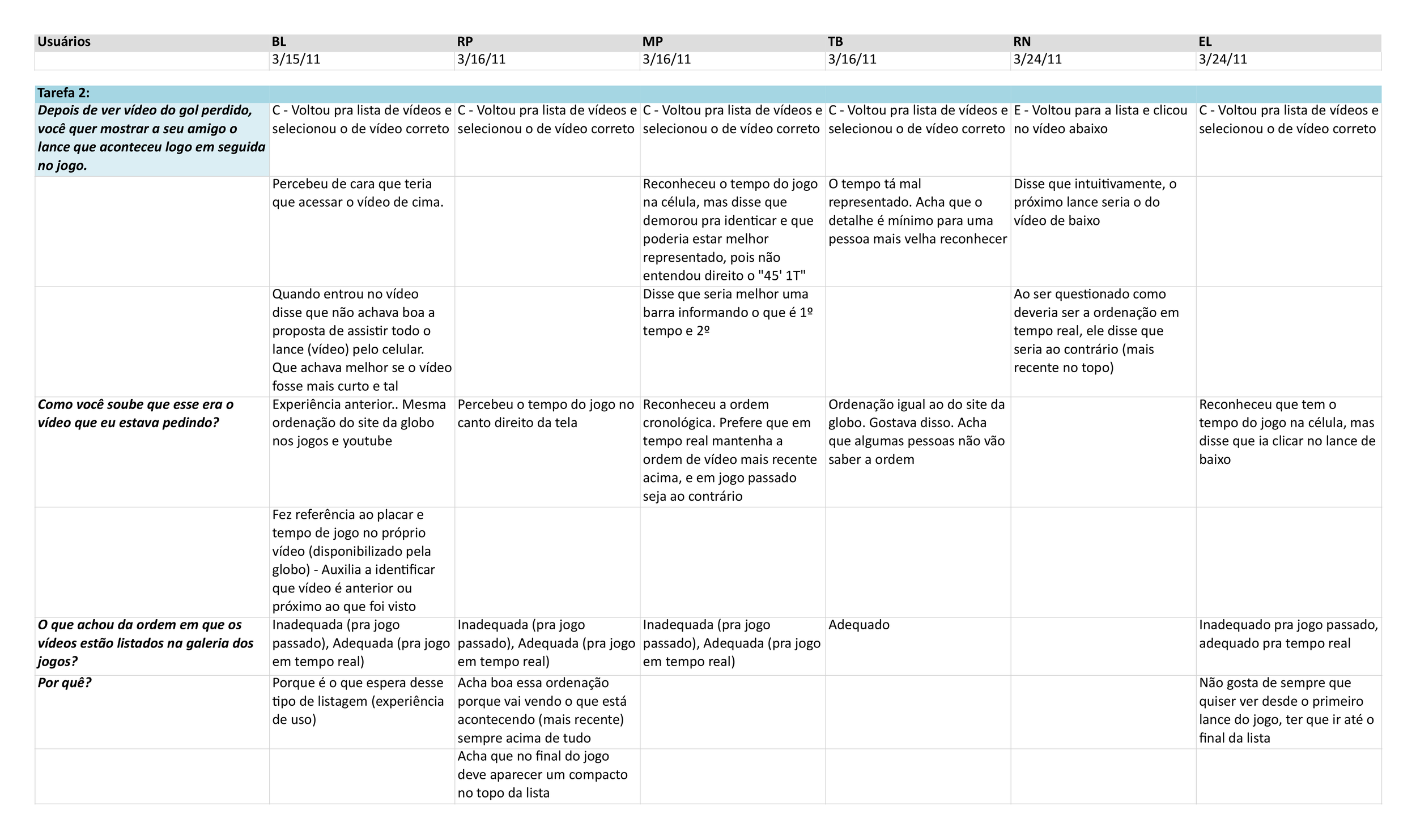
Insights on post-video user experience
Insights on real-time notifications
4. Visual interface design
Following validation of the core experience, I led the creation of the final high-fidelity interfaces for both iOS and Android. The visual design emphasized clarity, readability, and strong hierarchy within data-rich environments, while also capturing the emotional intensity and rhythm of live sports.
iOS interface: Matches by championship round.
The final experience balanced functional usability with a visually engaging sports aesthetic optimized for mobile consumption.
iOS interface: Championship standings
Concept exploration: Fan engagement beyond mobile
As part of the broader product vision, I explored a cross-channel engagement concept called Torcida Das Auto, designed to connect mobile devices, television broadcasts, and social participation during live matches.
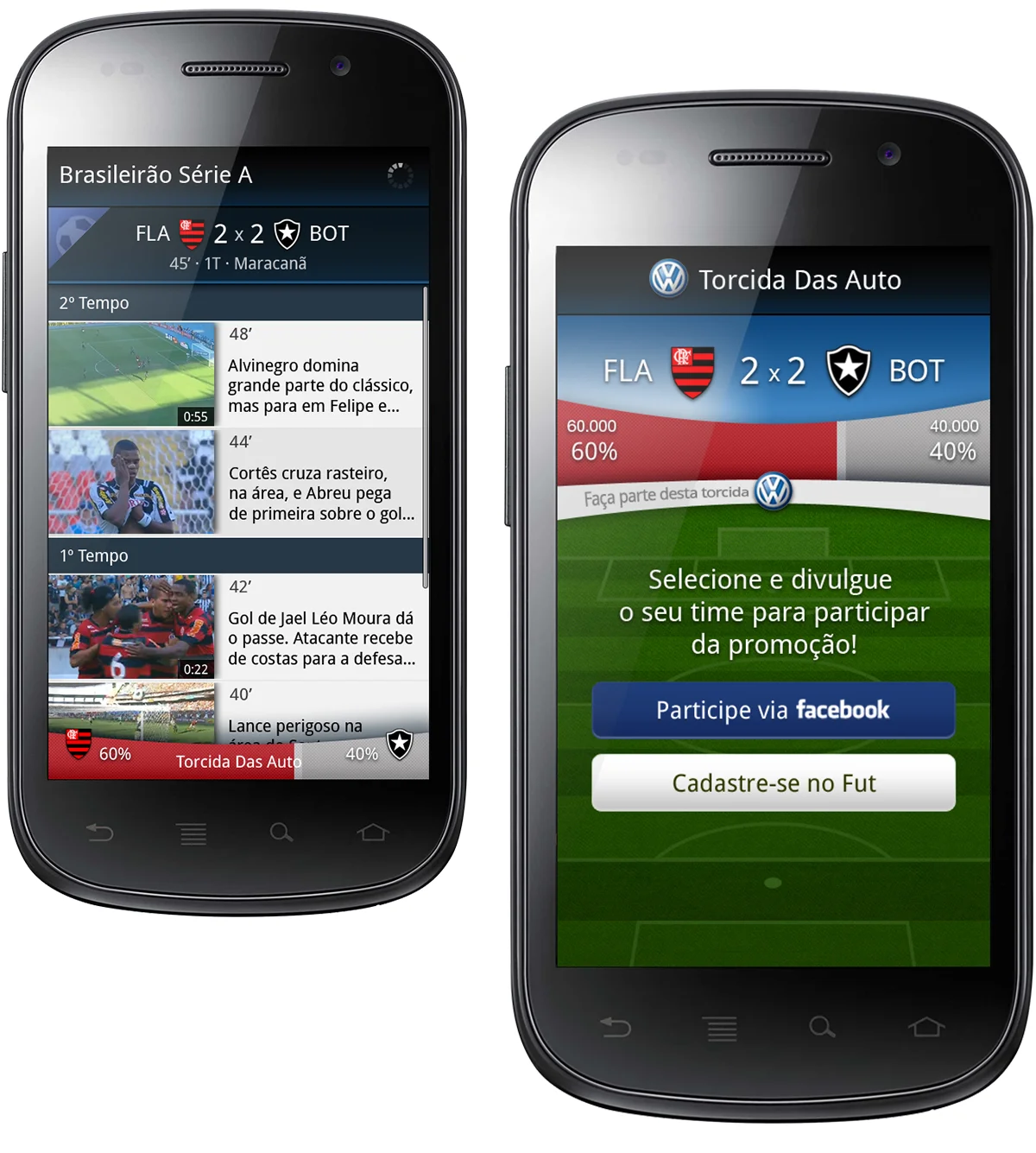
The concept envisioned supporters voting for their team through the FFFUT app, Facebook, or SMS while a match was in progress. Participation data would be aggregated in real time and visualized across mobile and television experiences, transforming spectators into active participants.
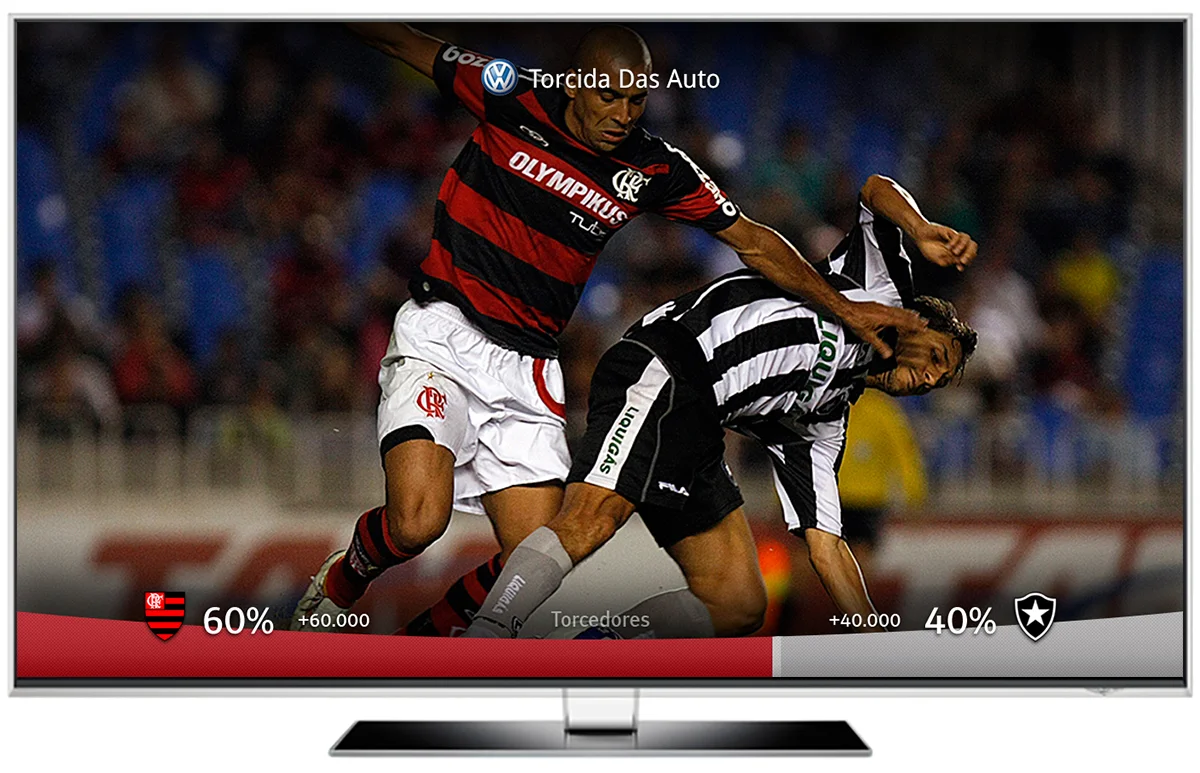
Rather than displaying simple percentages, fan participation was represented as a dynamic stadium crowd that grew throughout the match, creating a shared experience between viewers and supporters.
While never implemented, the concept explored how FFFUT could extend beyond a single device and become part of a broader ecosystem of live sports engagement, combining second-screen interaction, social participation, and broadcast experiences.
At the time, the proposal anticipated engagement patterns that would later become common across sports, streaming, and social platforms.
Collaboration and leadership
FFFUT was developed through close collaboration between design, product, engineering, and business teams.
Working within agile Scrum methodologies, I helped bridge conversations between business goals, technical feasibility, and user experience considerations while leading design execution across the project.
This experience strengthened my ability to:
Lead end-to-end product design initiatives
Facilitate cross-functional collaboration
Translate research insights into product decisions
Balance strategic thinking with executional detail
Use prototyping and testing as iterative decision-making tools
Looking back, FFFUT was one of the earliest projects in my career where I operated beyond interface design alone, contributing strategically to product direction while owning the full product design lifecycle from concept to delivery.