
Stressless
Connecting research, behaviour-change design, and product strategy to create a wellbeing platform for everyday resilience.
Role
Design Researcher and Product Designer
Platforms
iOS Concept Application + Behavioural Card System
Scope
Research Through Design, Human-Centred Design Research, Participatory Design, Product Strategy, Product Requirements Definition, Behaviour Change Design, Mobile Product Design, Information Architecture, Information Design, Data Visualization, Multi-channel Experience Design (Digital + Physical)
Institution
Emily Carr University of Art + Design
Overview
Stressless is a research-led product concept that explores how design can help people develop resilience to everyday life stress.
Created as part of my Master of Design thesis, the project combined participatory research, information design, and product design to investigate how individuals perceive their daily experiences, respond to stressors, and develop behaviours that support emotional, mental, physical, and social wellbeing.
The outcome was a mobile application and companion card system designed to encourage self-awareness and resilience through intentional daily actions.
Challenge
Everyday life stress is often addressed only after it becomes problematic. Yet many of the behaviours that support resilience—such as physical exercise, mindfulness practices, gratitude, social connection, and rest—can be developed gradually through everyday actions.
How might we help people become more aware of their everyday experiences and encourage behaviours that strengthen resilience before stress becomes overwhelming?
Answering this question required understanding not only what people experience, but also how they interpret those experiences, what actions they take in response, and how design might support more intentional behaviours.
Research approach
To explore this space, I designed and facilitated a participatory research program involving journaling activities, co-creation workshops, and data visualization. Participants were office workers from Vancouver and Montreal, Canada.

Participant journaling activity
Over one week, twelve participants documented their daily experiences through written and illustrated reflections. Participants documented their emotions, influencing factors, and resulting behaviours throughout the day.

Co-creation workshops
Participants explored how they perceived stress in relation to their present experiences, learned behaviours, and future aspirations.
These activities helped uncover sources of stress, coping strategies, and opportunities for positive behavioural change.
Key research insights
While participants were asked to document sources of stress and wellbeing, the most valuable insights emerged from the stories they chose to tell.
Their journals revealed moments of stress, anxiety, joy, connection, and self-care that extended beyond the original research prompts. These narratives suggested that resilience is often built through small, intentional behaviours rather than major interventions.
Research synthesis
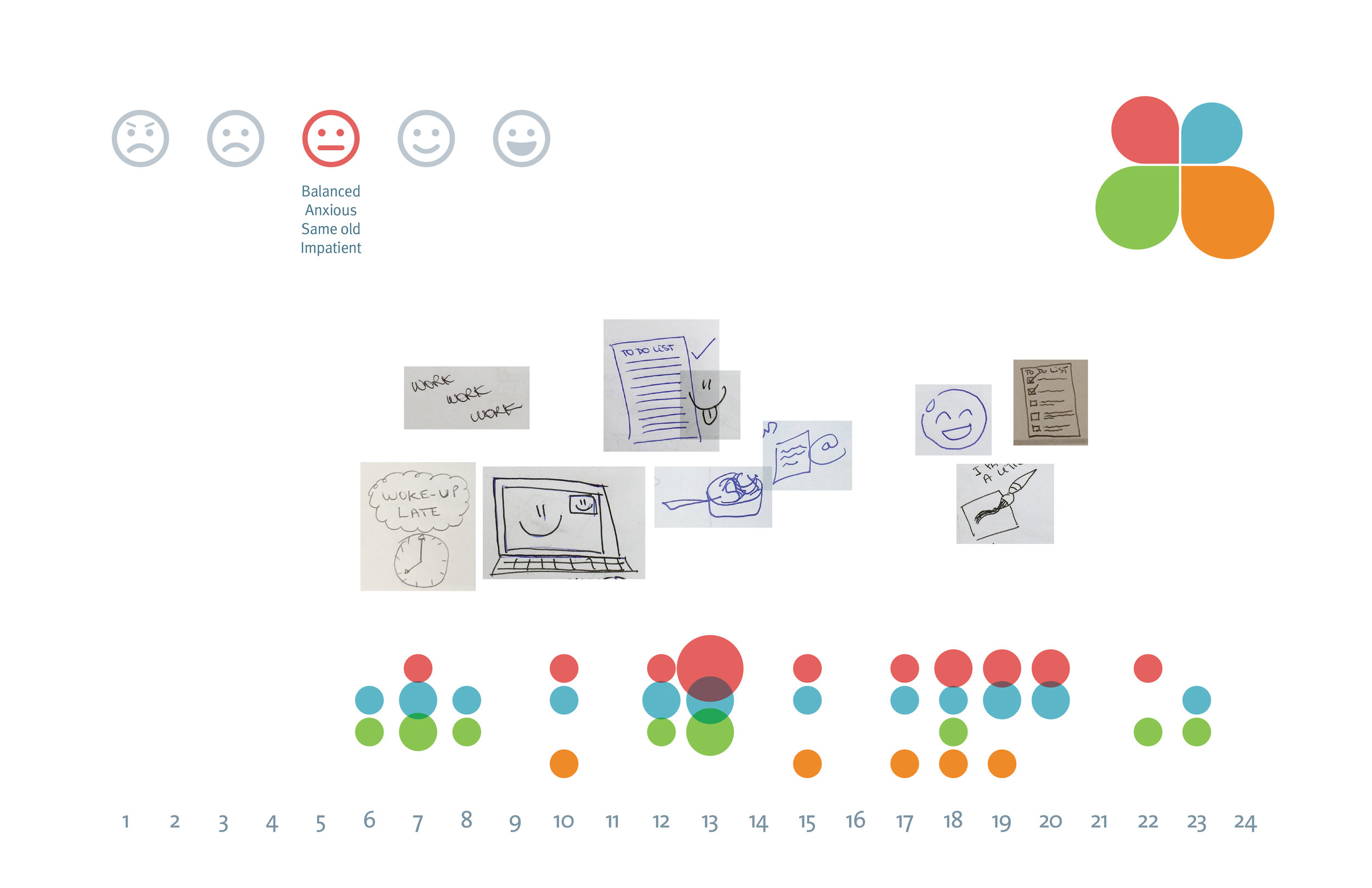
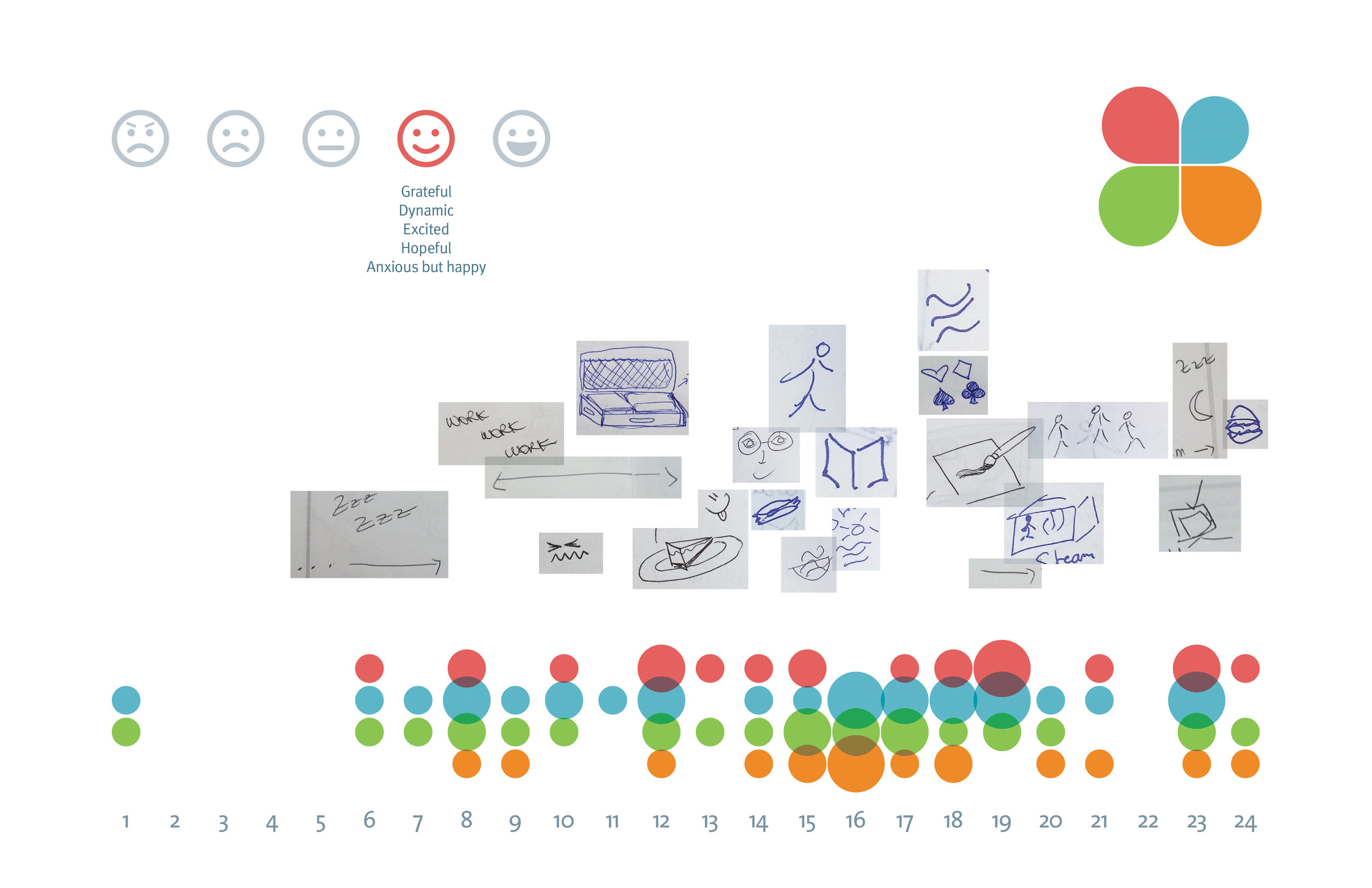
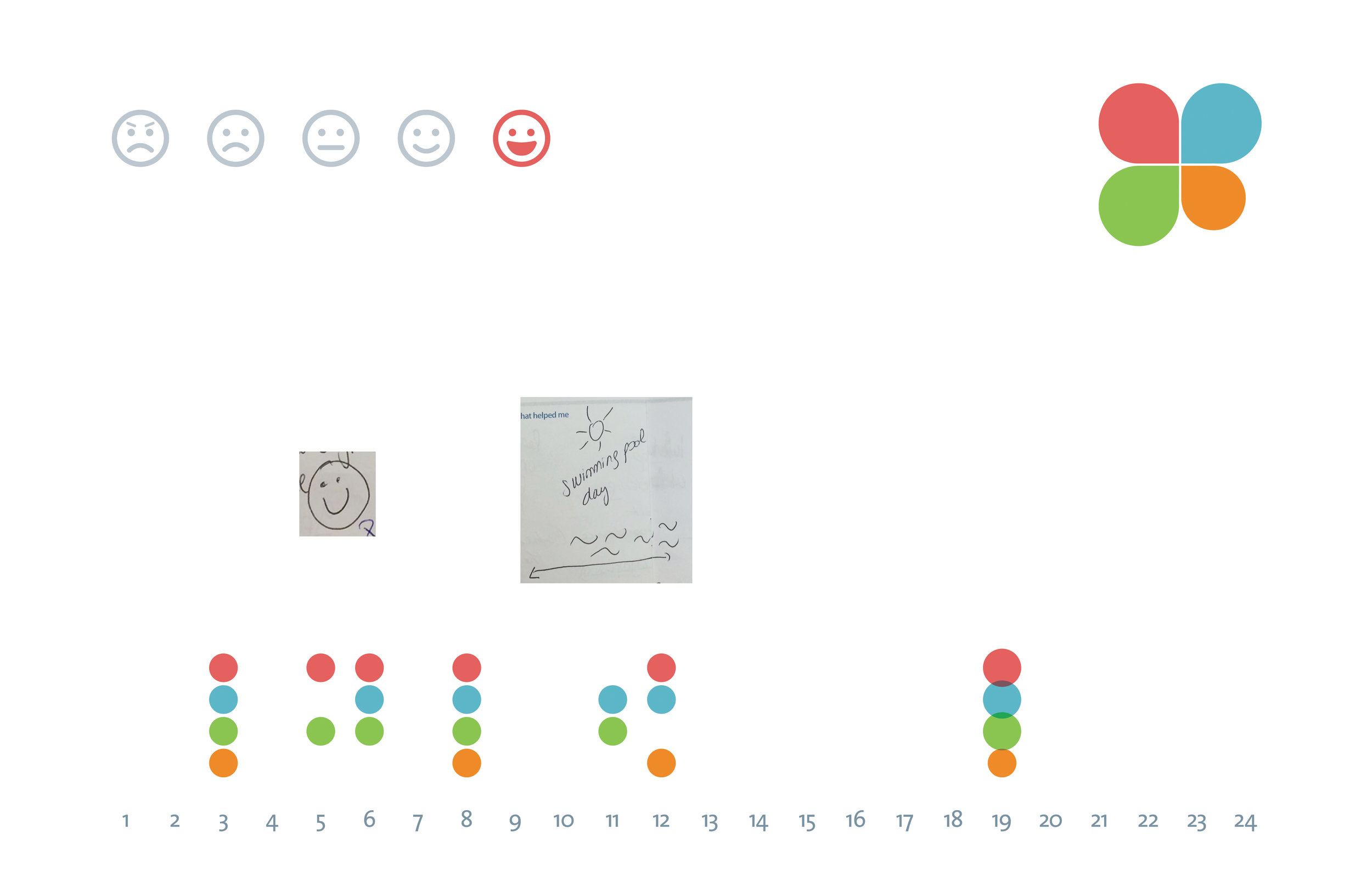
Qualitative and quantitative findings were synthesized into visual frameworks that revealed patterns across participants' experiences, behaviours, and perceptions of wellbeing.
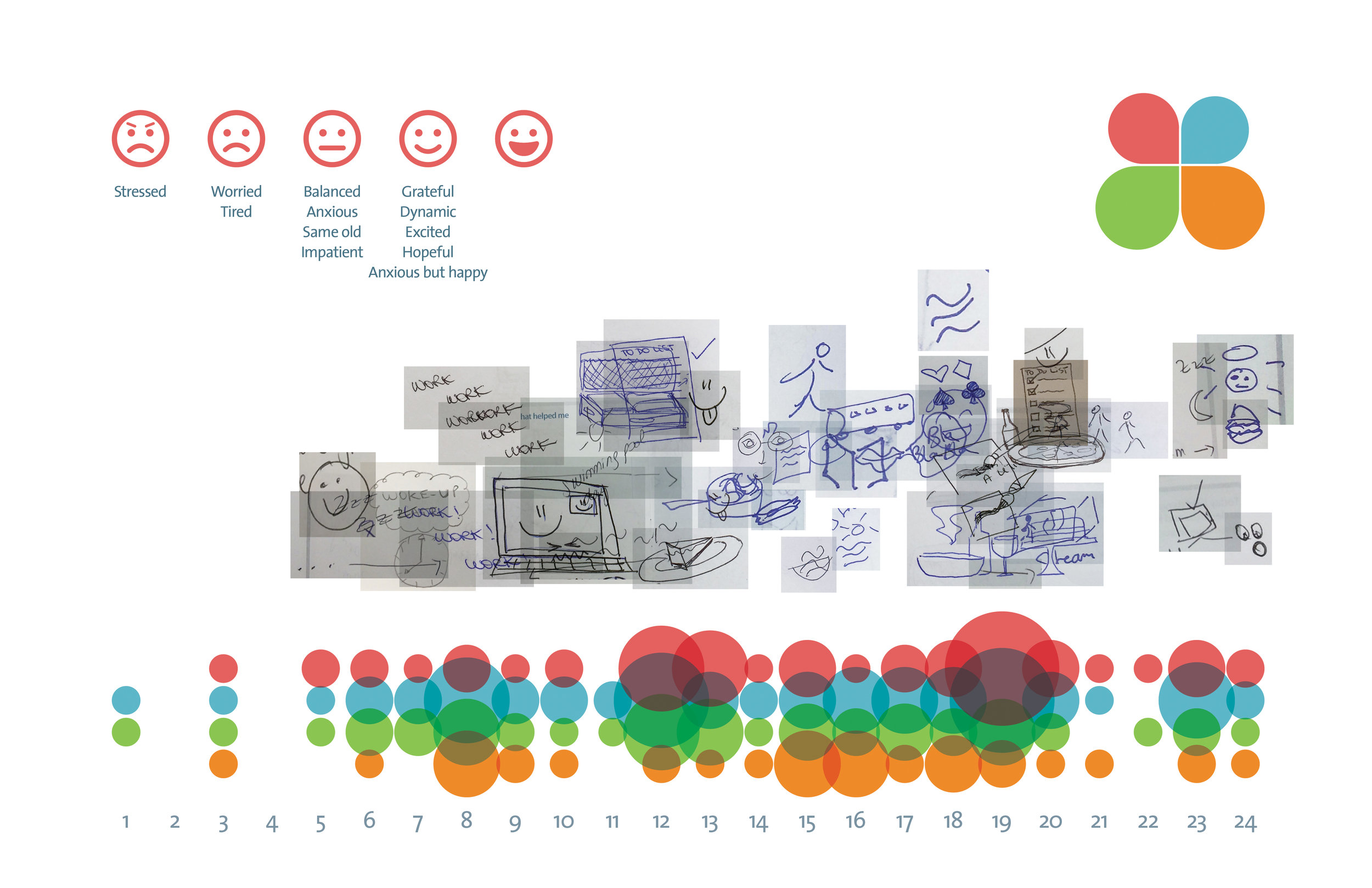
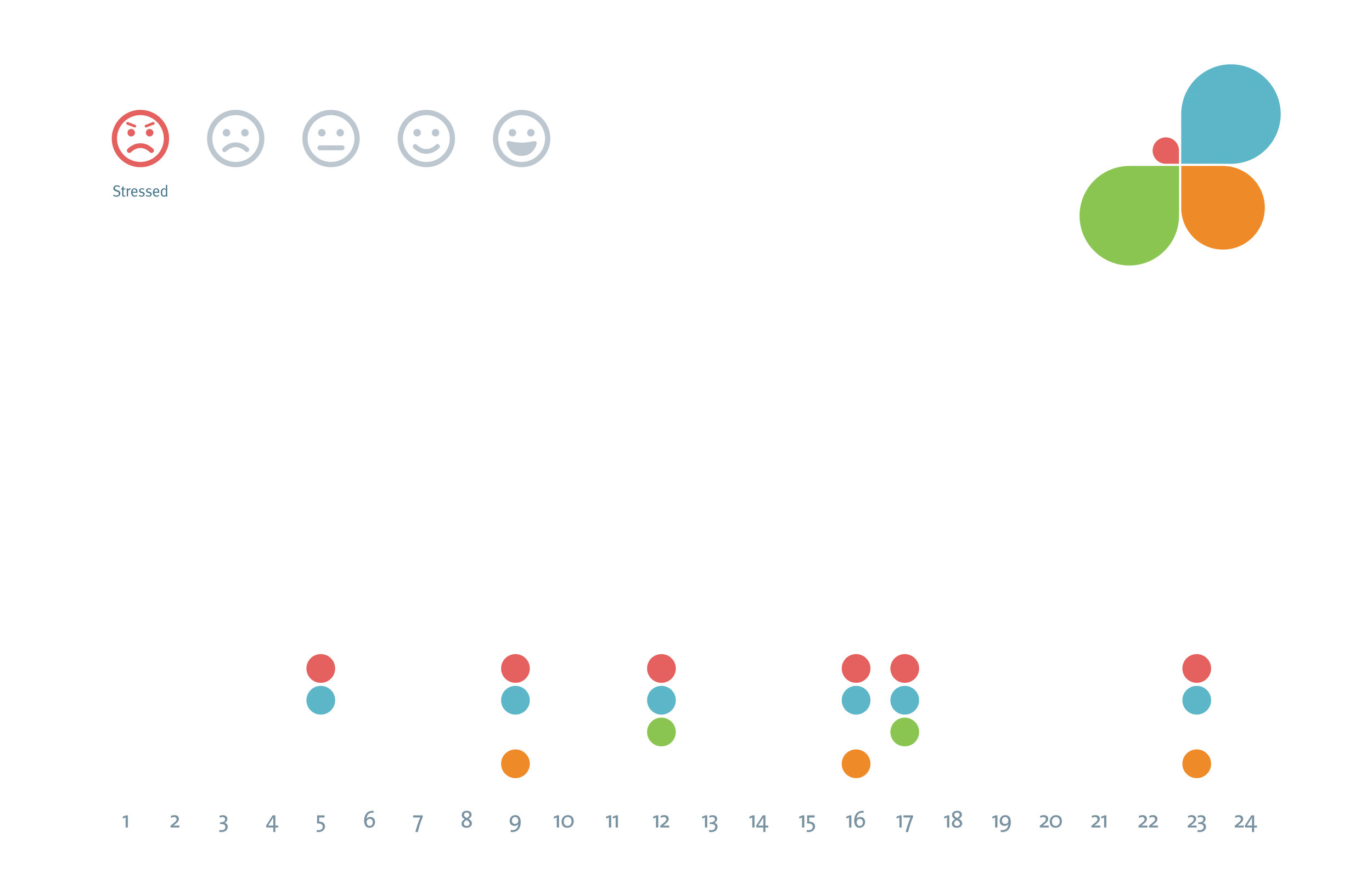
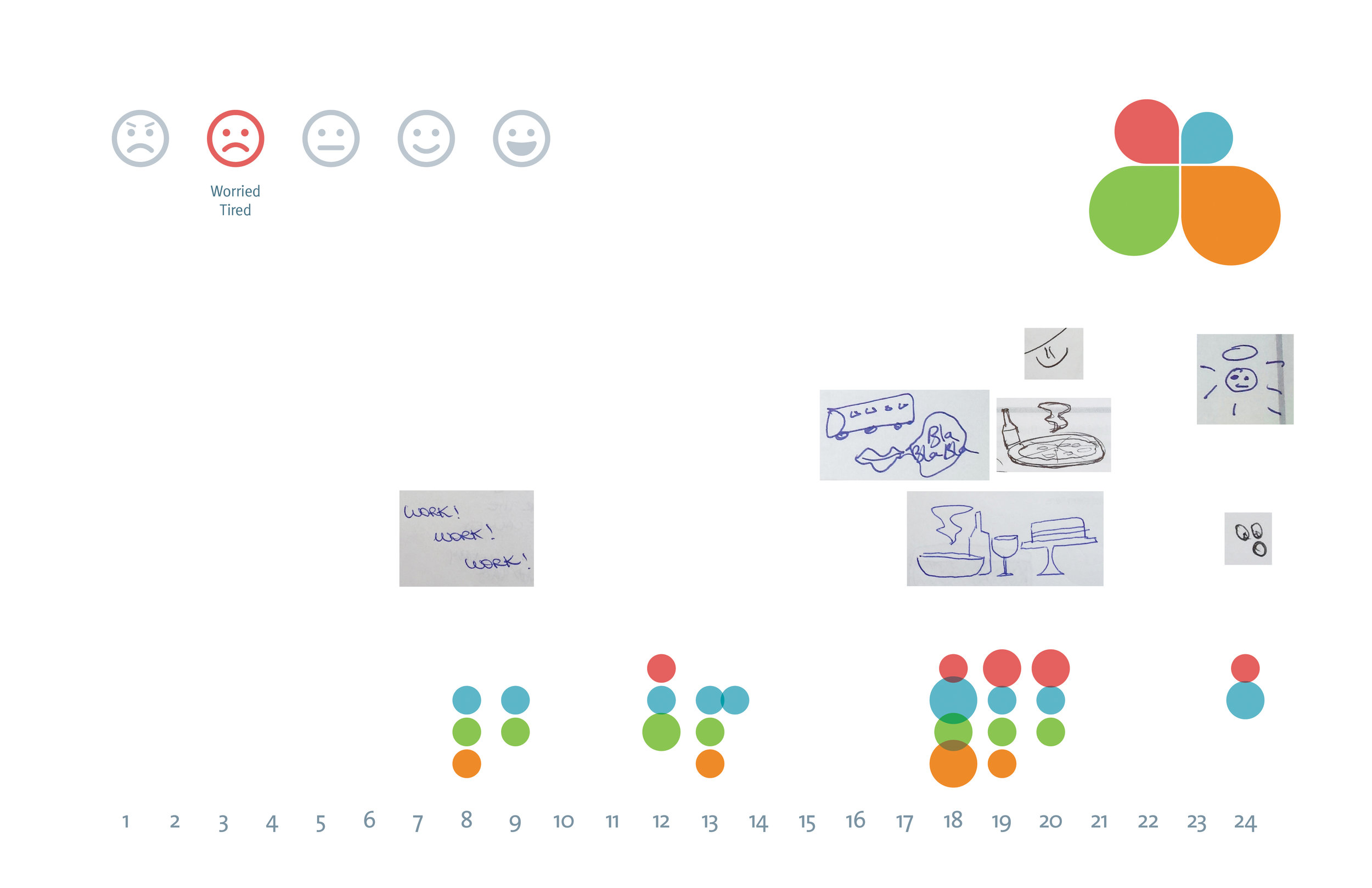
Four dimensions of resilience
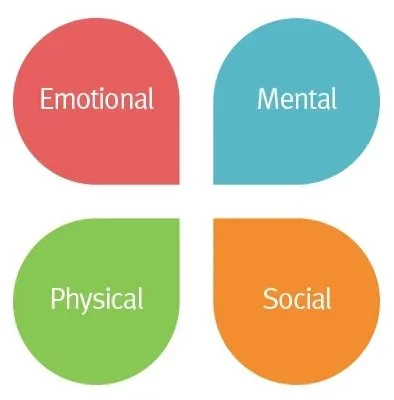
Emotional: Gratitude, positive reflection, celebrating achievements.
Mental: Mindfulness, focus, meditation, self-awareness.
Physical: Exercise, movement, rest, and recovery.
Social: Relationships, community, and support networks.
The act of documenting experiences often helped participants better understand the relationship between their feelings, behaviours, and routines, highlighting the value of self-awareness in everyday life.
Translating research into product strategy
The findings informed a set of product principles that guided the design of Stressless.
Design principles
Encourage achievable actions
Translate wellbeing goals into small, manageable activities that fit everyday life.
Adapt to context
Consider available time, location, and personal preferences when recommending activities.
Promote balance
Encourage engagement across emotional, mental, physical, and social dimensions of wellbeing.
Human-centred AI
Create opportunities for individuals to become more aware of their feelings, behaviours, and routines.
These principles informed the product strategy, information architecture, interaction design, and behavioural framework behind both the mobile application and companion card system.
Designing the product experience
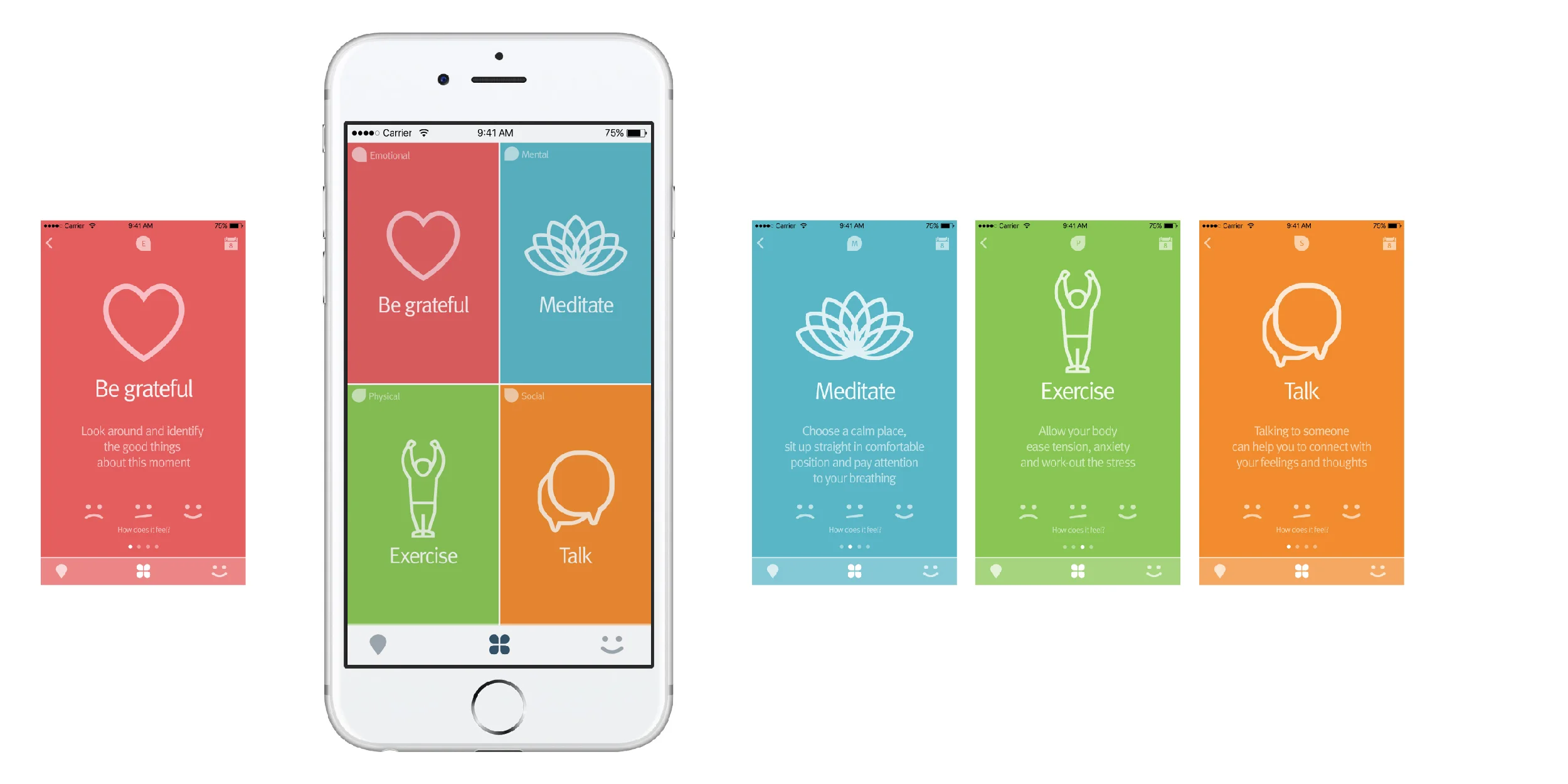
Building on these insights, Stressless App and Stressless Cards were designed around four dimensions of resilience—emotional, mental, physical, and social—and inspired by the work of game designer Jane McGonigal.
Rather than prescribing solutions, the goal was to help individuals discover and develop behaviours that fit naturally within their daily lives.
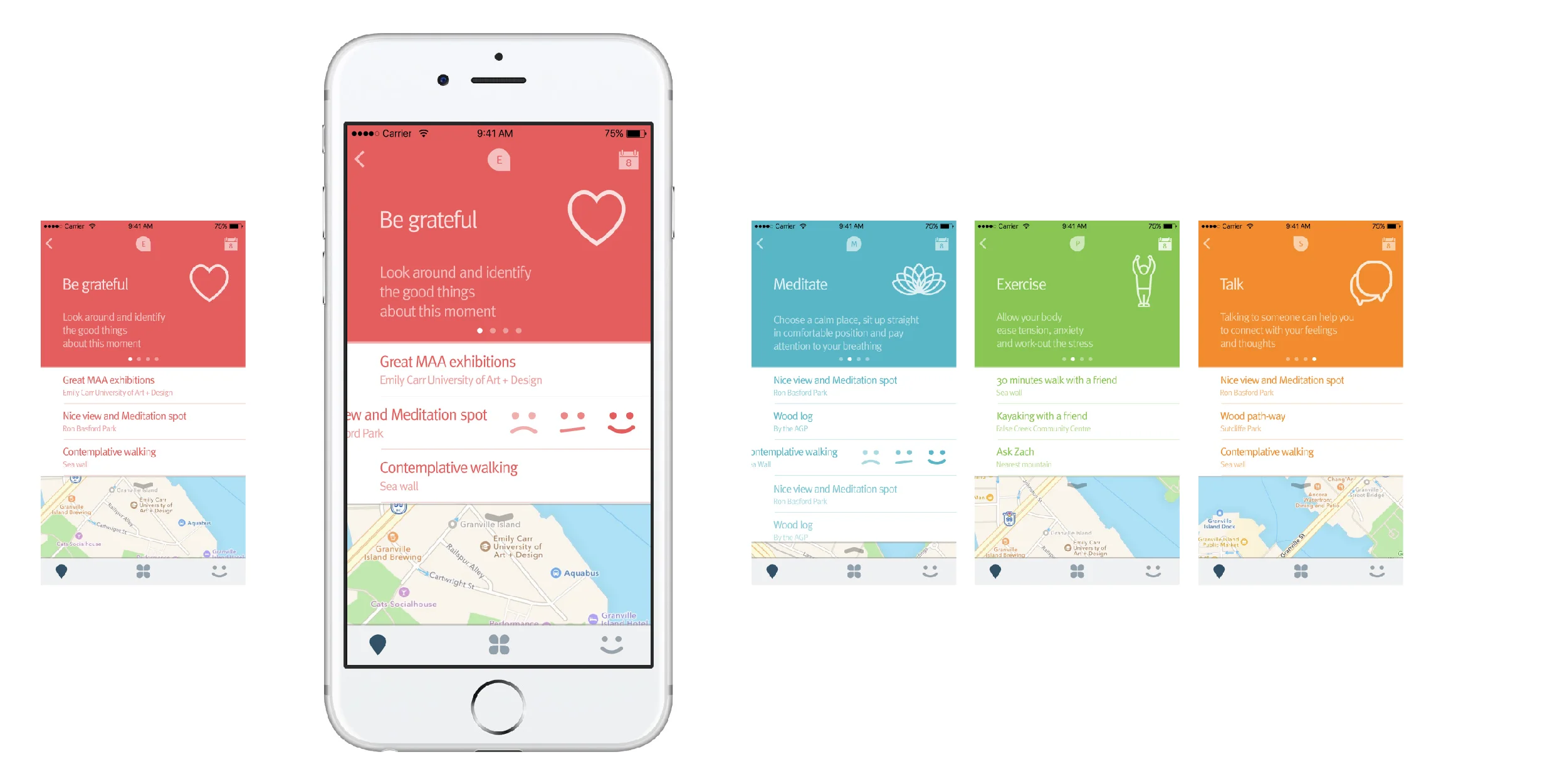
Stressless App

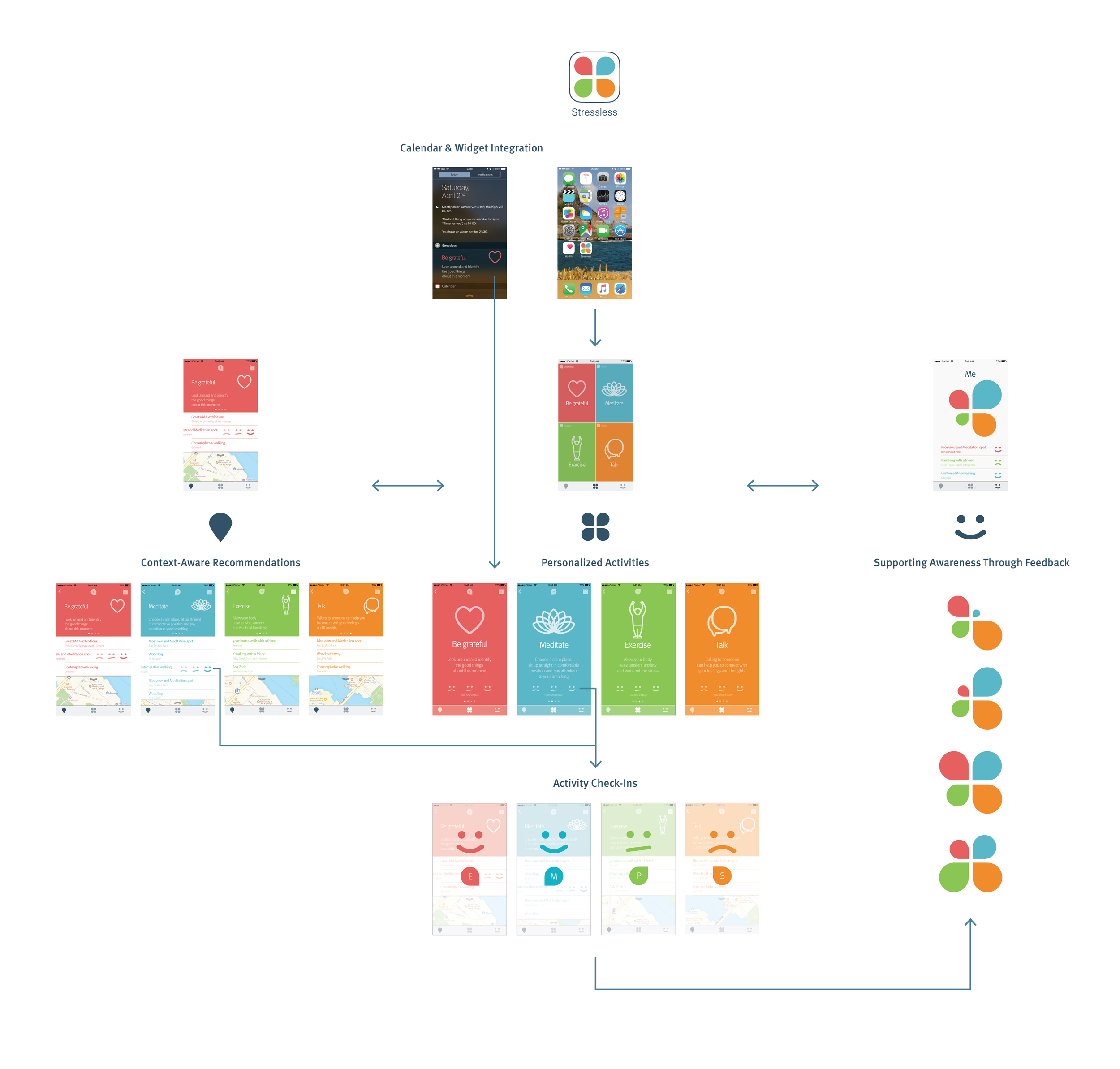
Context-aware recommendations
The concept explored location and time-based recommendations that adapted to a person's surroundings and circumstances. Users could browse emotional, mental, physical, and social activities relevant to their current location and circumstances.
For example, a user near a seawall who selects a physical goal might receive a recommendation for a contemplative walk. The objective was to make resilience-building behaviours feel achievable within everyday routines.
Personalized activities
Users could explore activities aligned with their interests and personal goals. A curated selection of emotional, mental, physical, and social activities was presented each day, encouraging variety across the four resilience dimensions.

Supporting awareness through feedback
Beyond recommending activities, Stressless App explored ways to help users better understand their behaviours over time. Users could check into completed activities and record how they felt afterward, creating a personal history of engagement across the four resilience dimensions.
A visual dashboard aggregated this information, helping users identify patterns in their activities and understand how their time was distributed across emotional, mental, physical, and social wellbeing. Rather than measuring productivity, the experience encouraged greater self-awareness through personal behavioural data and activity history.
Integrating wellbeing into everyday life
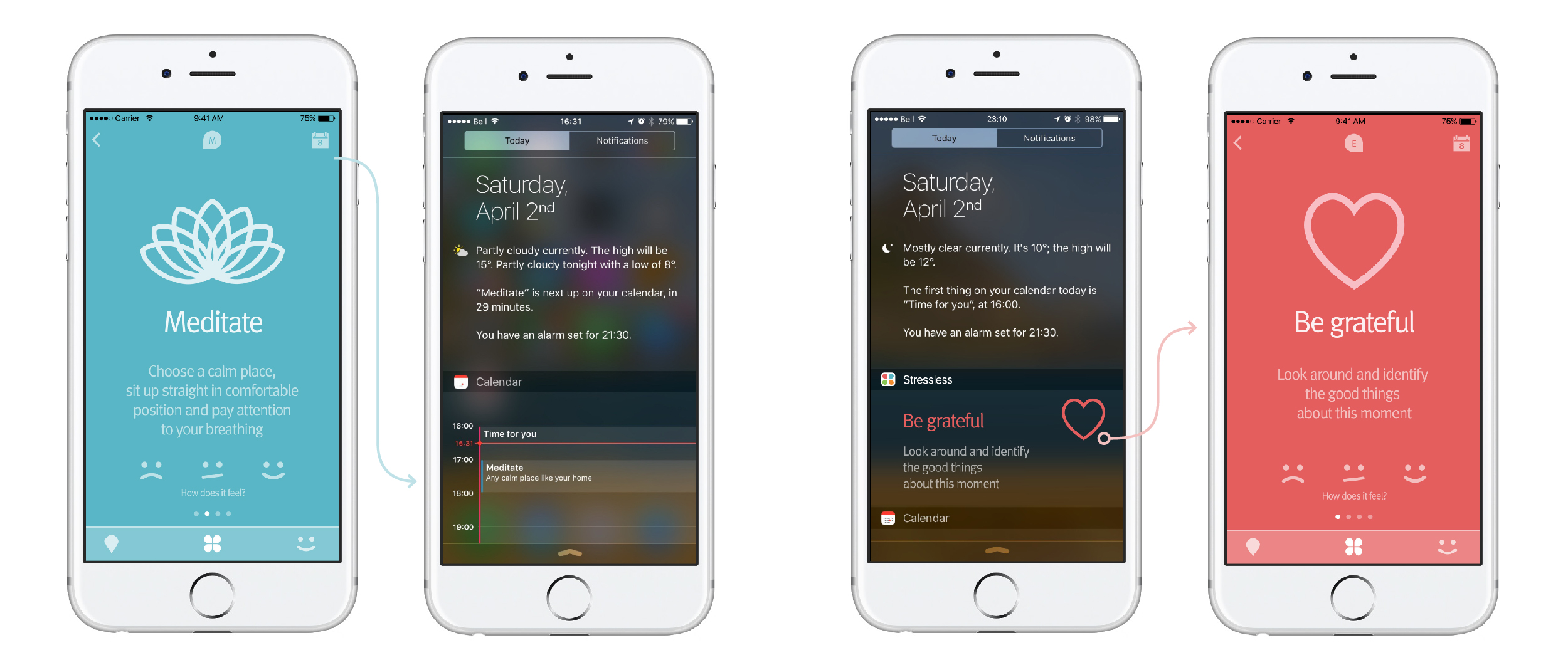
Users could add activities such as meditation or gratitude practices directly to their calendars and receive contextual recommendations through a home-screen widget. These features embedded wellbeing practices into existing routines rather than requiring users to adopt entirely new behaviours.
Information architecture
Stressless Cards
Alongside the digital experience, I designed Stressless Cards, a companion system that translated the same resilience framework into a tangible format.


The card set translated the resilience framework into practices such as gratitude, meditation, sleep, and social connection, each accompanied by suggested activities organized into four levels of commitment.
Examples ranged from:
Meditate for five minutes, three times a week
Write down three things you are grateful for
Spend intentional time with a friend
Participate in a community activity twice a month

This approach recognized that resilience looks different for everyone and encouraged individuals to adapt activities to their own circumstances, routines, and goals.
Key takeaways
Stressless App + Cards demonstrate my approach to connecting research, product strategy, and experience design.
The project involved designing and facilitating original research, synthesizing qualitative and quantitative insights, translating research insights into product requirements and experience principles, and designing a complete product ecosystem from concept to interface.
While developed as an academic project, it reflects the same approach I continue to apply in complex product environments today: connecting research, systems thinking, and product design to transform human insights into meaningful product experiences.