
WebShows
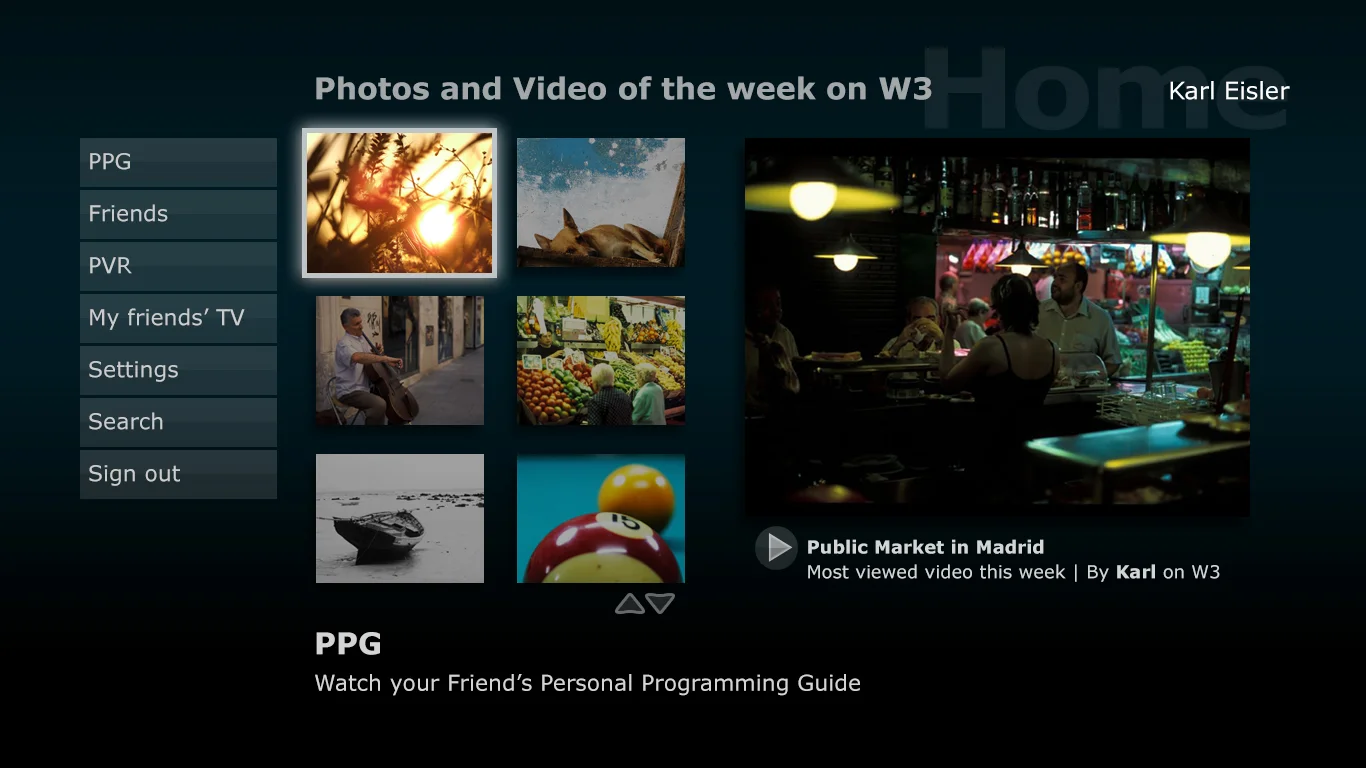
Bringing social video and photo feeds into a personal, shared TV experience.
Role
Senior User Experience and Product Design Lead
Platforms
Interactive TV, Web, Microsoft Mediaroom
Scope
Product Strategy, Design Leadership, UX Research Translation, Information Architecture, Interaction Design, Visual Interface Design, Prototyping, Social Media Integration, Interactive TV
Award
Deutsche Telekom Interactive TV Award 2008
Context
WebShows was an interactive TV concept developed for Deutsche Telekom Entertain at a time when video, photos, and social relationships were rapidly moving online.
Initially developed for the 2008 Deutsche Telekom Interactive TV Award, the project explored a simple but ambitious question:
How might television become a more personal and social place without asking people to rebuild their digital lives from scratch?
Grounded in user-centred research, WebShows extended the earlier product direction into a more connected social-TV experience. The product brought together media and social connections from people’s existing online accounts, organizing videos, photos, and recommendations around the people they knew.
The result was a lean-back viewing experience that transformed fragmented online media into personal channels designed for the living room.
The opportunity
The growing availability of online video created more choice, but also more fragmentation. People were already sharing media across different services, yet discovering and watching that content often required navigating multiple websites, accounts, and interfaces.
For Deutsche Telekom Entertain, this created an opportunity to make television more relevant to digitally connected audiences while extending the value of its IPTV platform.
I helped define a product strategy that created an accessible path into the experience. Public content, popular media, and search gave first-time viewers something immediate to explore, while account connections, friend networks, and personalized channels created a more relevant experience for signed-in users.
Designing for the TV environment
WebShows was designed for the particular strengths and constraints of interactive television: a shared screen, remote-control navigation, viewing from a distance, and a more relaxed mode of use than desktop browsing.
I defined the information architecture and interaction patterns for content discovery, people search, channel browsing, account-connected media, and playback. Rather than reproducing web browsing on a television, the interface revealed information progressively, helping viewers move through the experience without unnecessary navigation effort.
The visual system combined a bold editorial approach with clear hierarchy, visible focus states, and large readable elements designed for viewing at a distance. This helped make discovery feel welcoming while supporting confident, remote-first interaction.
People Programming Guide (PPG)
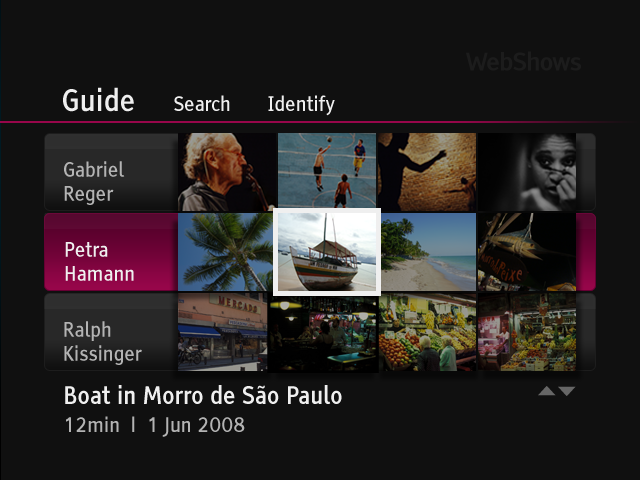
The People Programming Guide was the central product interaction model: a TV guide organized around people rather than broadcasters.
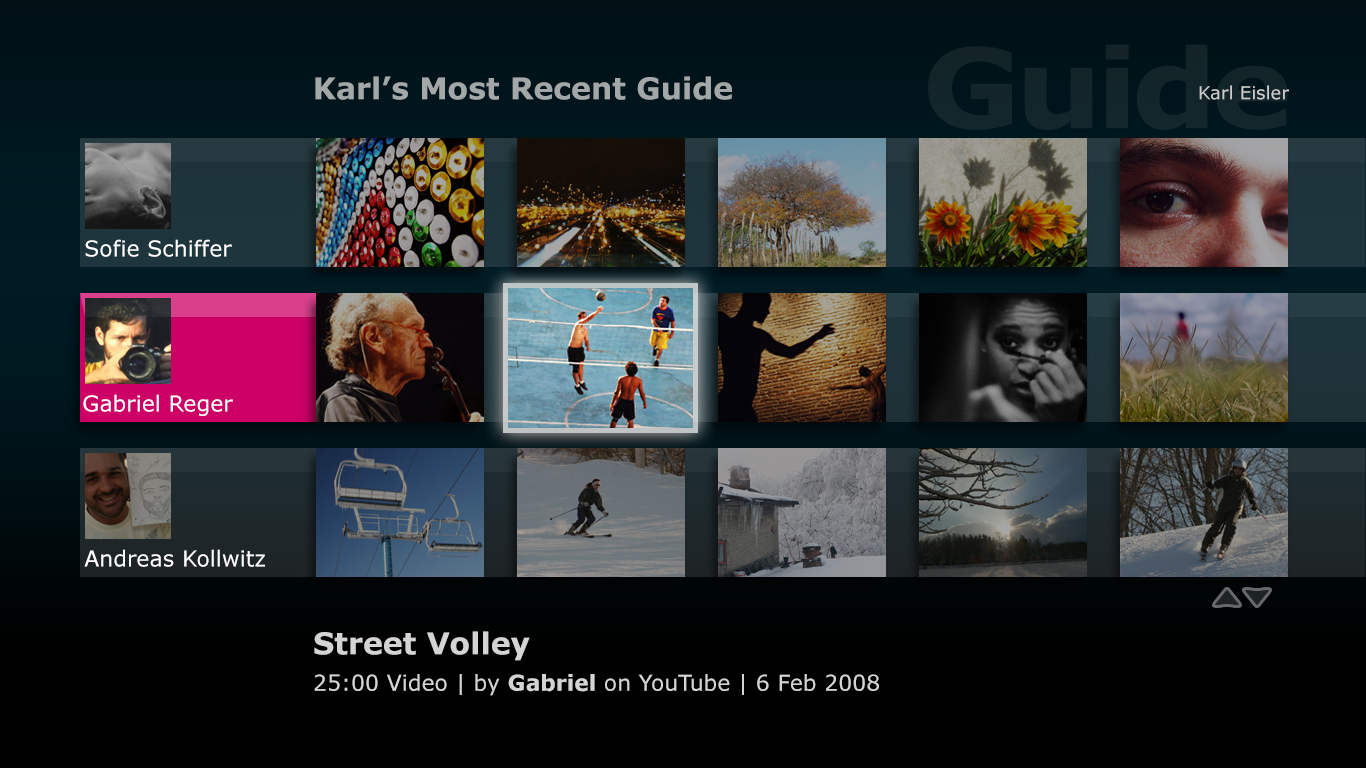
Each friend, family member, or public creator became a channel. Recently shared photos and videos appeared as browsable sequences, allowing viewers to move naturally between people, media collections, and playback.
This structure translated a familiar television mental model into an emerging social-media context. Instead of browsing disconnected websites or feeds, people could sit back and explore what mattered to them through one coherent viewing environment.
People’s playback
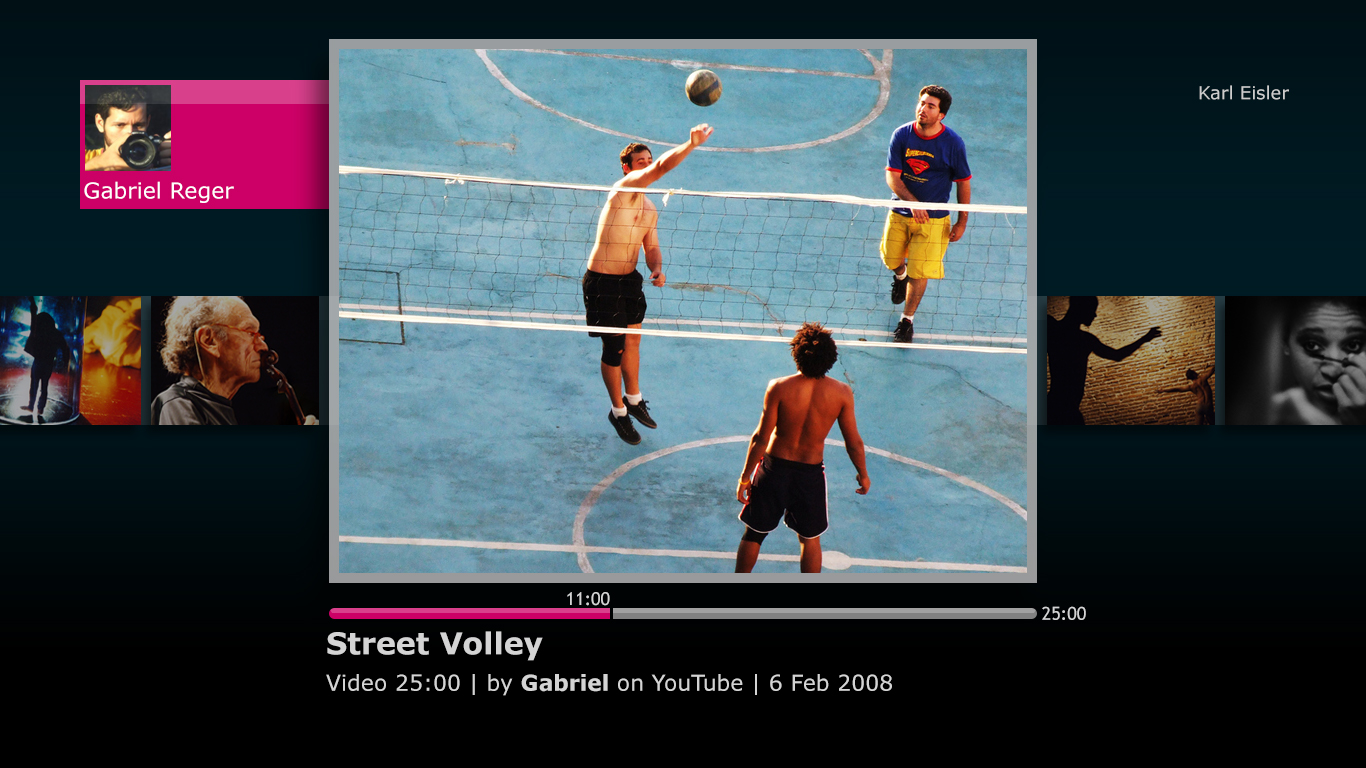
Media imported from online services varied considerably in resolution and quality. Playback was designed to account for this variation rather than treating every source as television-grade content.
Lower-resolution videos could be presented at an appropriate scale rather than automatically filling the screen, while channels created a continuous viewing experience through sequenced video playback and photo slideshows.
The concept also considered the realities of shared household use. Personal profiles, selective sharing, privacy controls, and age-appropriate content settings gave people more control over how their media and social connections appeared on a shared television.
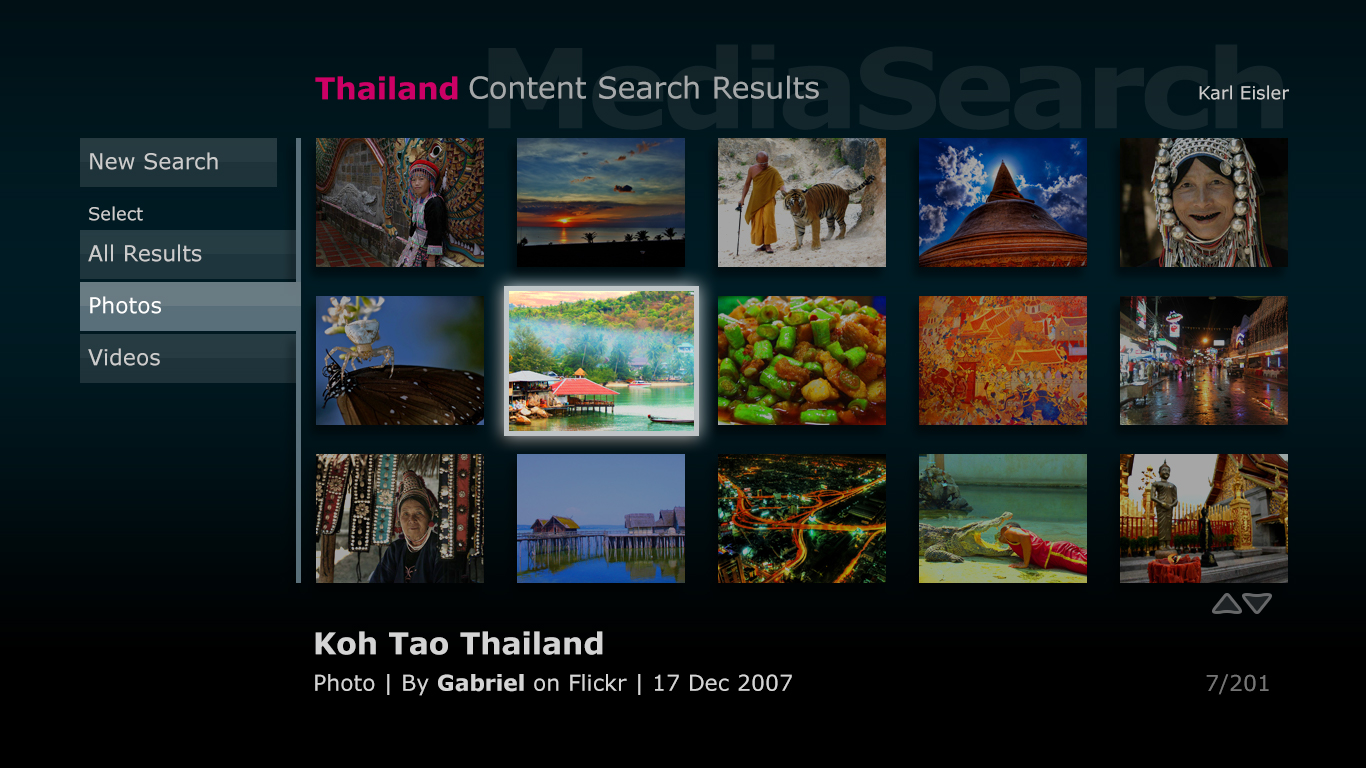
Media search results
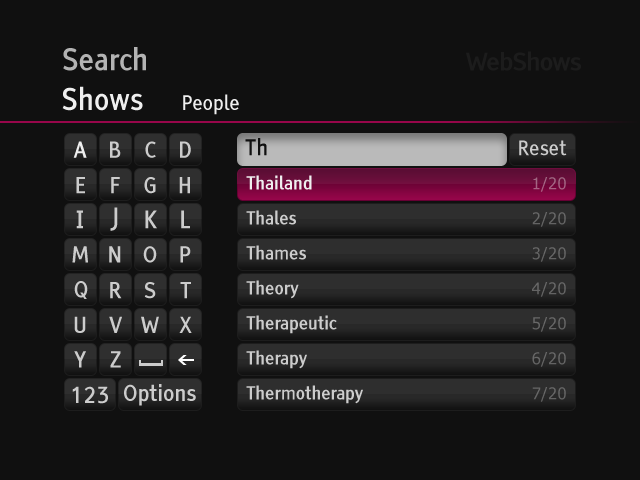
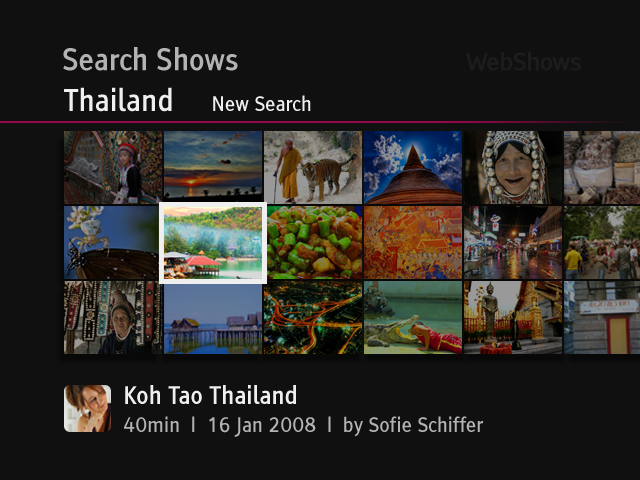
Separate paths for media and people search made it easier to find a specific video, explore public content, or discover new creators without recreating the complexity of desktop browsing on a television.
Browsing connected friends
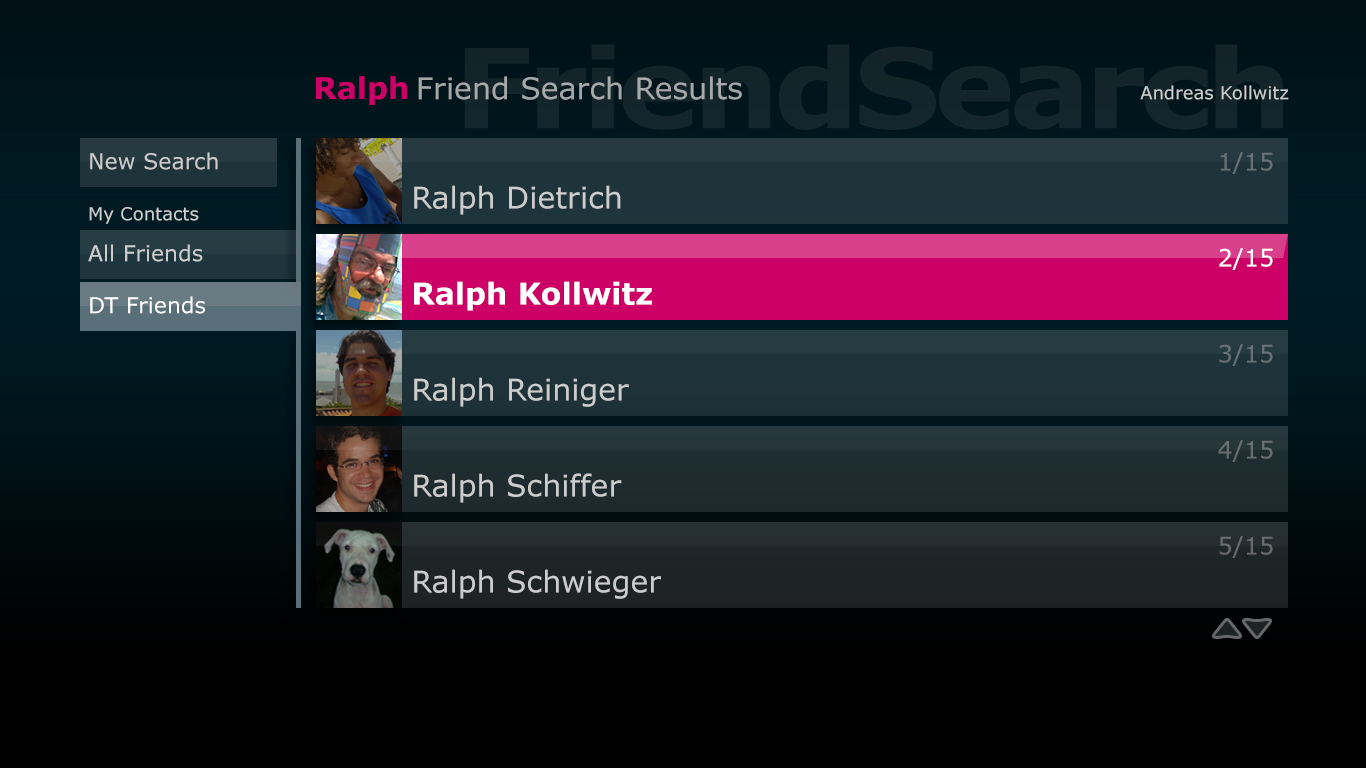
Separate paths for media and people search made it easier to find a specific video, explore public content, or discover new creators without recreating the complexity of desktop browsing on a television.
Social recommendations
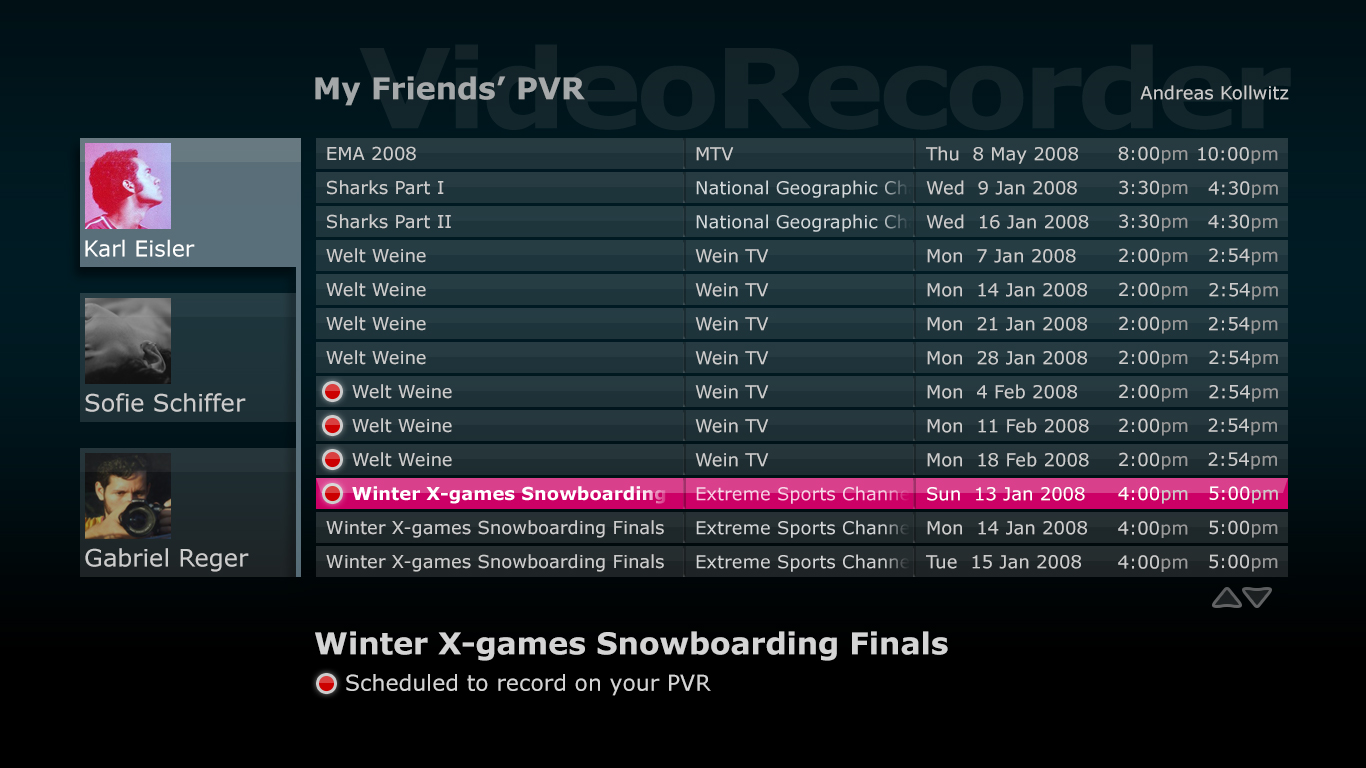
The concept of Friends’ Personal Video Recorder extended social discovery beyond user-generated content. With permission, friends’ recorded programmes, viewing activity, and favourite on-demand titles could become a source of recommendations, helping viewers discover relevant shows through people they trusted.
My contribution
As the hands-on Senior UX and Product Design Lead, I led the product work end to end while guiding two junior designers.
My work included:
Translating user-centred research into a new social-TV product direction
Defining the product model, user journeys, information architecture, and navigation framework
Designing the People Programming Guide and account-connected content model
Creating remote-first interaction patterns for discovery, search, browsing, and playback
Establishing a visual system aligned with Deutsche Telekom’s brand guidelines
Developing the visual interface and high-fidelity prototype
Balancing audience needs with Deutsche Telekom’s business, technical, and platform requirements
Leading design direction, critique, and delivery across the design team
From award concept to funded implementation
WebShows was selected as a finalist in the 2008 Deutsche Telekom Interactive TV Award, placing among the top ten submissions worldwide. Following the award, Deutsche Telekom funded an implementation phase for its Entertain environment.
I adapted the visual interface and remote-first interaction model for Microsoft Mediaroom, balancing the original social-TV concept with the platform’s technical requirements and navigation conventions.
I also designed the presentation materials and, alongside the WebShows project manager, presented the project to the Deutsche Telekom Award Committee at the company’s headquarters in Darmstadt, Germany.
WebShows for Microsoft Mediaroom
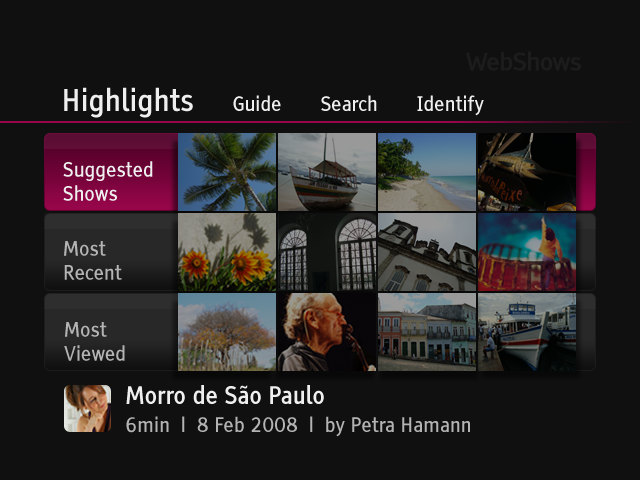
The implementation phase translated the original social-TV vision into a more platform-native experience for Deutsche Telekom Entertain. It retained the product’s people-first approach to discovery while introducing familiar entry points for browsing popular, recent, and recommended content.
Highlights
Browse Suggested Shows, Most Recent, and Most Viewed content.
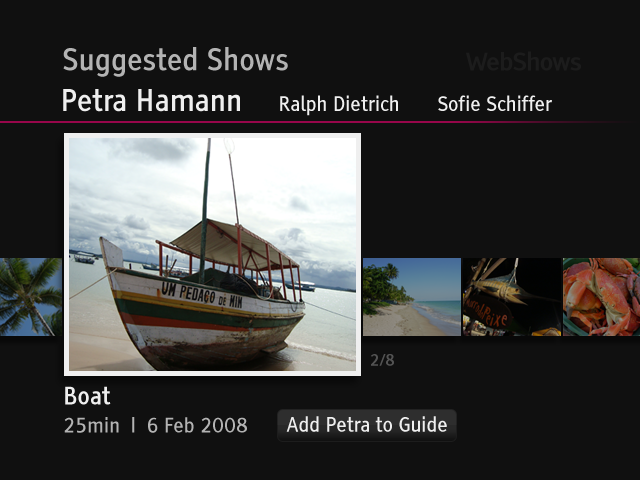
Guide
Explore the most recent media shared by connected friends.
Search
Find people and media through a TV-optimized search experience.
Outcome
WebShows demonstrated how television could become a more personal and connected part of people’s digital lives: not simply another screen for web video, but a place for shared discovery, social recommendation, and familiar media rituals.
The project remains an early example of my approach to product design: grounding emerging technology in user behaviour, translating fragmented platforms into a coherent system, and carrying a product vision from research-informed concept through platform adaptation and stakeholder presentation.